
太25
馬太福音第25章
十童女的比喻
1「那時,天國好比十個童女拿著燈出去迎接新郎。

Francken, Hieronymus the Younger – Parable of the Wise and Foolish Virgins(c.1616)Hermitage Museum(Public Domain, Wikimedia Commons)
2其中有五個是愚拙的,五個是聰明的。
3愚拙的拿著燈,卻不預備油;
4聰明的拿著燈,又預備油在器皿裡。

Phoebe Anna Traquair – AThe Parable of the Ten Virgins(before 1936)Mansfield Traquair Church, Edinburgh(Creative Commons Attribution-Share Alike 4.0 International license., Wikimedia Commons)
5新郎遲延的時候,她們都打盹,睡著了。

James Tissot – The Wise Virgins (Les vierges sages)(1886~96)(Public Domain, Brooklyn Museum)
6半夜有人喊著說:『新郎來了,你們出來迎接他!』
7那些童女就都起來收拾燈。
8愚拙的對聰明的說:『請分點油給我們,因為我們的燈要滅了。』
9聰明的回答說:『恐怕不夠你我用的;不如你們自己到賣油的那裡去買吧。』

William Blake – The Parable of the Wise and Foolish Virgins(c.1826)(Public Domain, Wikimedia Commons)
10她們去買的時候,新郎到了。那預備好了的,同他進去坐席,門就關了。
11其餘的童女隨後也來了,說:『主啊,主啊,給我們開門!』

James Tissot – The Foolish Virgins (Les vierges folles)(1886~96)(Public Domain, Brooklyn Museum)
12他卻回答說:『我實在告訴你們,我不認識你們。』
13所以,你們要警醒;因為那日子,那時辰,你們不知道。」
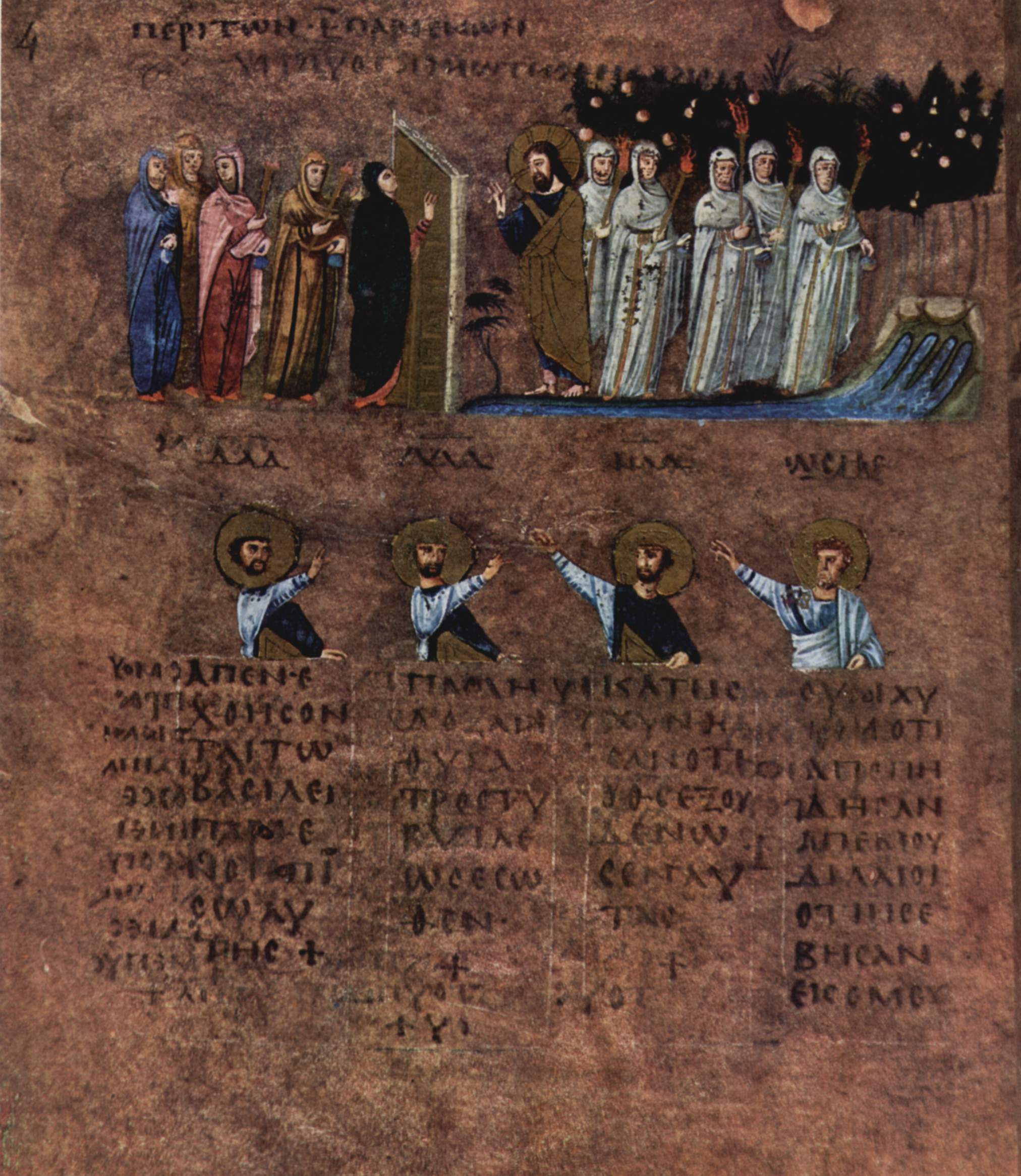
Anonymous – The parable of the wise and the foolish virgins, Rossano Gospels(c.550)(Public Domain, Wikimedia Commons)
按才幹接受託付的比喻( 路 19:11-27 )
14「天國又好比一個人要往外國去,就叫了僕人來,把他的家業交給他們,
15按著各人的才幹給他們銀子:一個給了五千,一個給了二千,一個給了一千,就往外國去了。
16那領五千的隨即拿去做買賣,另外賺了五千。
17那領二千的也照樣另賺了二千。
18但那領一千的去掘開地,把主人的銀子埋藏了。

The Soc – The Coloured Picture Bible for Children(Public Domain, Freegroups.net)
19過了許久,那些僕人的主人來了,和他們算帳。
20那領五千銀子的又帶著那另外的五千來,說:『主啊,你交給我五千銀子。請看,我又賺了五千。』
21主人說:『好,你這又良善又忠心的僕人,你在不多的事上有忠心,我要把許多事派你管理;可以進來享受你主人的快樂。』

Jan Luyken – parable of the talents, illustrating Matthew 25:14-30 in the Bowyer Bible, Bolton, England.(by 1795)(Free Art License., Wikimedia Commons)
22那領二千的也來,說:『主啊,你交給我二千銀子。請看,我又賺了二千。』
23主人說:『好,你這又良善又忠心的僕人,你在不多的事上有忠心,我要把許多事派你管理;可以進來享受你主人的快樂。』

Anonymous – A depiction of the parable of talents, showing two men brining their money back to their master, A Woodcut from Historiae celebriores Veteris Testamenti Iconibus representatae(1712)(Public Domain, Wikimedia Commons)
24那領一千的也來,說:『主啊,我知道你是忍心的人,沒有種的地方要收割,沒有散的地方要聚斂,
25我就害怕,去把你的一千銀子埋藏在地裡。請看,你的原銀子在這裡。』
26主人回答說:『你這又惡又懶的僕人,你既知道我沒有種的地方要收割,沒有散的地方要聚斂,
27就當把我的銀子放給兌換銀錢的人,到我來的時候,可以連本帶利收回。
28奪過他這一千來,給那有一萬的。
29因為凡有的,還要加給他,叫他有餘;沒有的,連他所有的也要奪過來。
30把這無用的僕人丟在外面黑暗裡;在那裡必要哀哭切齒了。』」
萬民受審判
31「當人子在他榮耀裡、同著眾天使降臨的時候,要坐在他榮耀的寶座上。

Anonymous – Christ the King “Come, ye blessed of my Father, inherit the kingdom prepared for you from the foundation of the world.”(18th century)Greek Catholic Cathedral of Hajdúdorog, Hungary(Creative Commons Attribution-Share Alike 3.0 Unported license. photo by Jojojoe, Wikimedia Commons)
(更多...)

Anonymous – Christ Great High Priest(17th century)(Creative Commons Attribution 2.0 Generic license. photo by Sharon Mollerus, Wikimedia Commons)

Szimeon Szimeonov (T. Gruntovics) – Christ the high pontiff(1760)Greek Orthodox Church and Museum, Miskolc(Public Domain, Wikimedia Commons)

Greger Zinovjev – Icon of Christ with Sergey Radonezhsky and Evfimy of Suzdal(1681)(Public Domain, Wikimedia Commons)

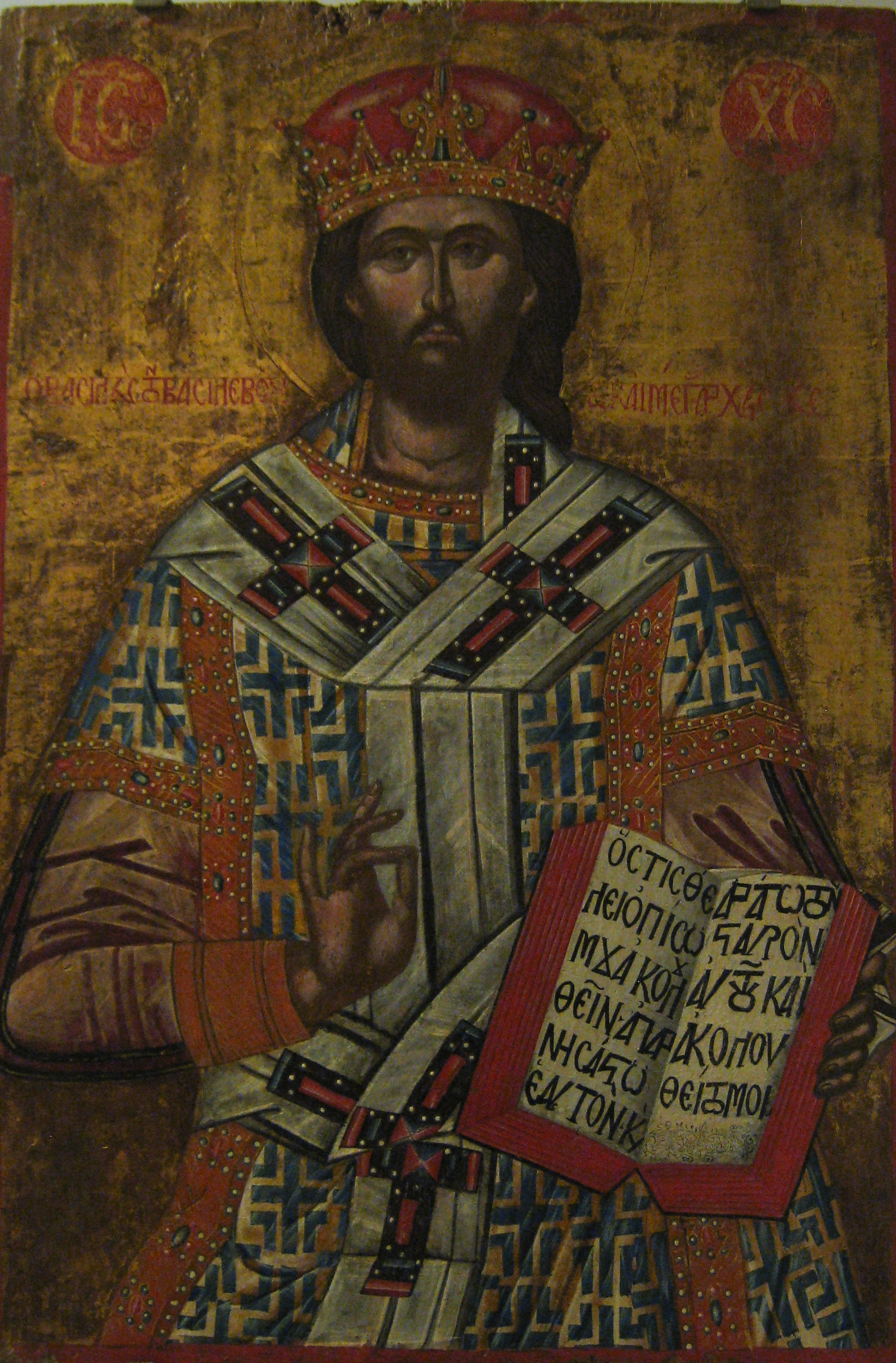
Priest Nicholas – Ο Χριστός Μέγας Αρχιερεύς(17th century)(Public Domain, Wikimedia Commons)

Unknown painter of Candia – Ο Χριστός Μέγας Αρχιερεύς και αφιερωτές(late 16th century)(Public Domain, Wikimedia Commons)

Anonymous – Иисус Христос Царь Царей и Великий Архиерей.(c.1600)(Public Domain, Wikimedia Commons)

Anonymous – Χριστός η Άμπελος’. Christ the Vine(19th century)Byzantine and Christian Museum, Athens, Greece(Creative Commons Attribution-Share Alike 2.0 Generic license. photo by Tilemahos Efthimiadis, Wikimedia Commons)

Simon Ushakov – Great Hierarch.(1658)State Historical Museum, Russia(Public Domain, Wikimedia Commons)
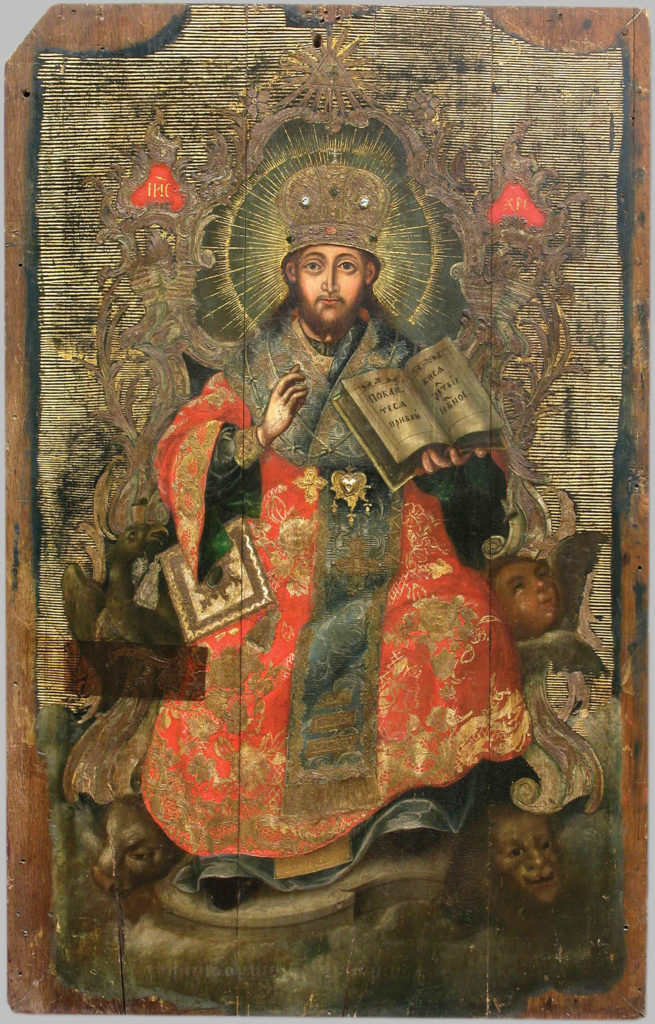
Anonymous – Хрыстос на прастоле(18th century)(Public Domain, Wikimedia Commons)
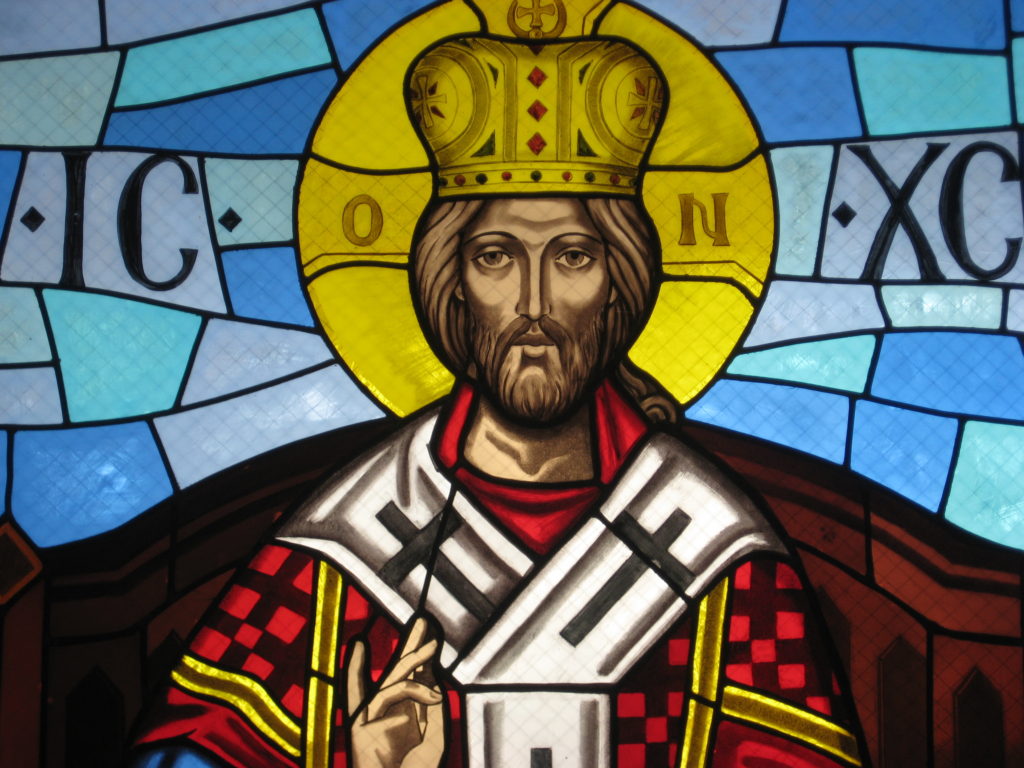
Stained glass window at the Melkite Catholic Annunciation Cathedral in Roslindale depicting Christ the King with the regalia of a Byzantine emperor.(2009)(Creative Commons Attribution-Share Alike 3.0 Unported license. Attribution: John Stephen Dwyer, Wikimedia Commons)

Hubert van Eyck: Deutsch: Genter Altar, Altar des Mystischen Lammes, obere mittlere Haupttafel, Szene: Thronender Gottvater(1426~32)Kathedrale St. Bavo(Public Domain, Wikimedia Commons)

William Earley – Stained glass window TU REX GLORIAE CHRISTE.(1933)St. Joseph’s Church, Toomyvara, County Tipperary, Ireland(Creative Commons Attribution-Share Alike 3.0 Germany license. Attribution: Andreas F. Borchert, Wikimedia Commons)


32萬民都要聚集在他面前。他要把他們分別出來,好像牧羊的分別綿羊山羊一般,
33把綿羊安置在右邊,山羊在左邊。
34於是王要向那右邊的說:『你們這蒙我父賜福的,可來承受那創世以來為你們所預備的國;
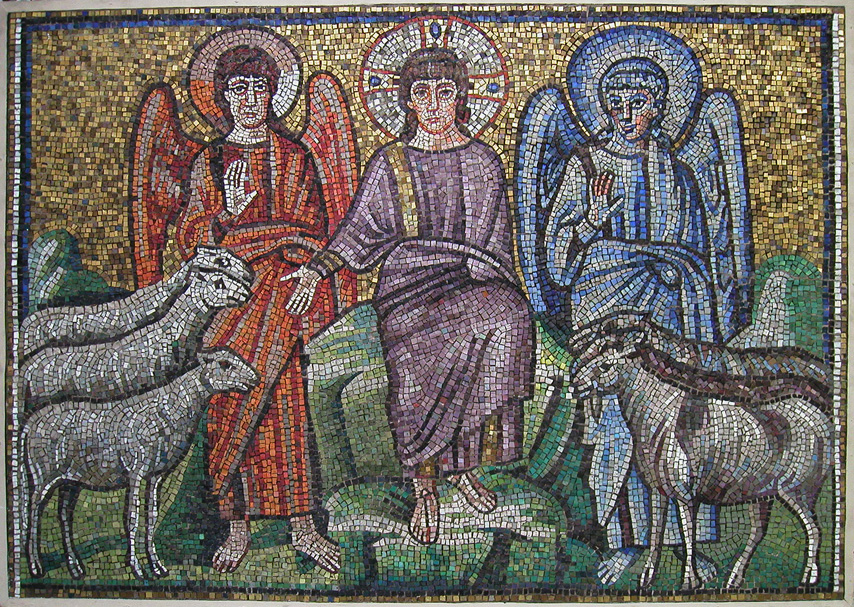
Johnston Fund – Separation of Sheep and Goats(1924)Metropolitan Museum of Art(Creative Commons CC0 1.0 Universal Public Domain Dedication, Wikimedia Commons)
(更多...)
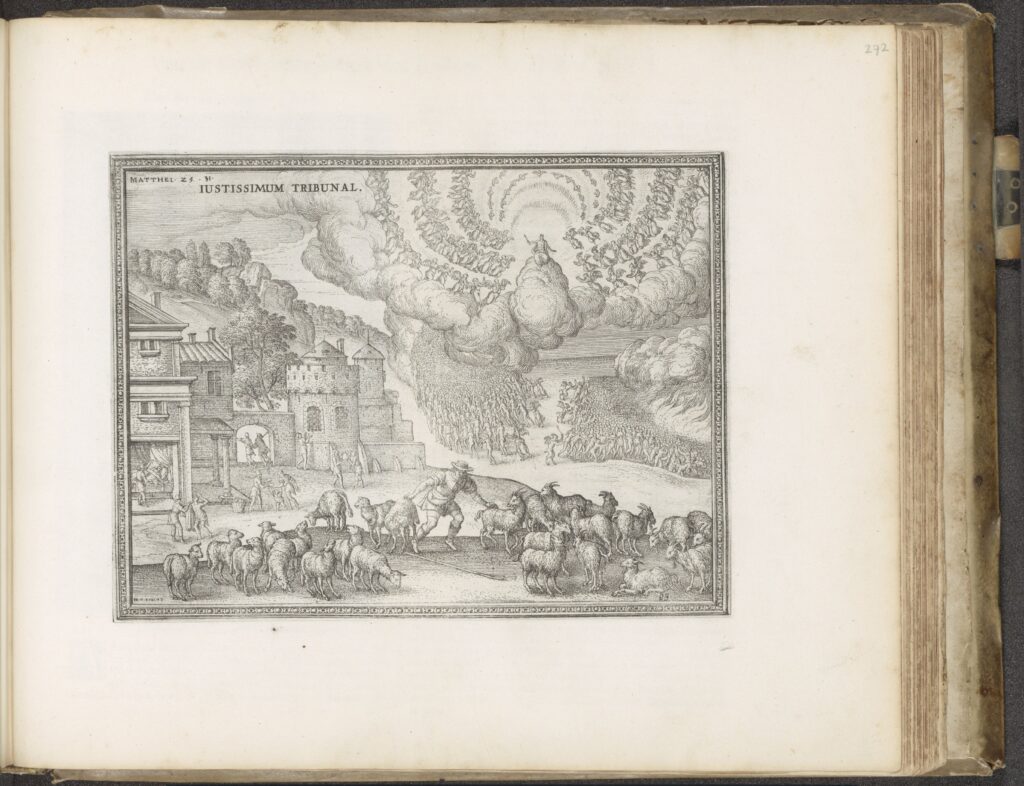
Pieter van der Borcht (I) – Scheiden van de schapen en de bokken en het Laatste OordeelJustissimum tribunal(1582 – 1593 and / or 1653 – 1654)Rijksmuseum(Creative Commons CC0 1.0 Universal Public Domain Dedication, Wikimedia Commons)

Dirck de Bray – NovemberScheiden van de schapen en de bokkenMaanden van het jaar (serietitel)(1600 – 1699)Rijksmuseum(Creative Commons CC0 1.0 Universal Public Domain Dedication, Wikimedia Commons)

Maerten de Vos – Scheiden van de schapen en de bokken en het laatste oordeelZeven werken van barmhartigheid(1585 and/or 1643)Rijksmuseum(Creative Commons CC0 1.0 Universal Public Domain Dedication, Wikimedia Commons)

The parable of the sheep and goats; a flock of sheep moving towards Christ and the Holy Spirit in right background; in left foreground a goat jumping towards a soldier and a rich man in conversation; illustration to an unidentified New Testament. (c.1551)British Museum(Public Domain, Wikimedia Commons)


35因為我餓了,你們給我吃,渴了,你們給我喝;我作客旅,你們留我住;
36我赤身露體,你們給我穿;我病了,你們看顧我;我在監裡,你們來看我。』
37義人就回答說:『主啊,我們甚麼時候見你餓了,給你吃,渴了,給你喝?
38甚麼時候見你作客旅,留你住,或是赤身露體,給你穿?
39又甚麼時候見你病了,或是在監裡,來看你呢?』
40王要回答說:『我實在告訴你們,這些事你們既做在我這弟兄中一個最小的身上,就是做在我身上了。』

The Seven Corporal Works of Mercy by a painter from the Noord-Hollandse school of Haarlem, the Netherlands (1580)(Museum Boijmans Van Beuningen, Rotterdam, the Netherlands)
(更多...)
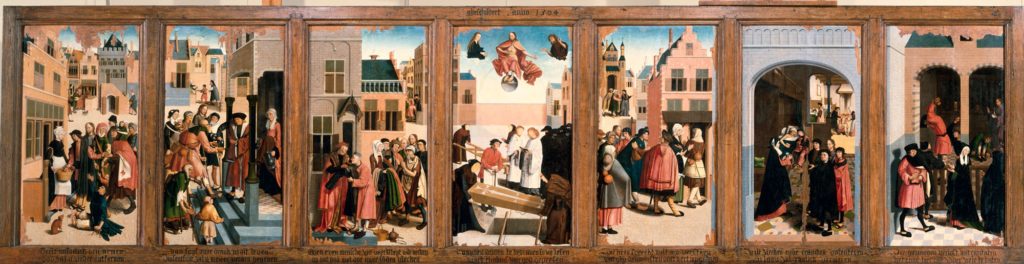
Master of Alkmaar – The Seven Works of Charity. / Polyptych with the seven works of charity.(1504)Museum Boijmans Van Beuningen(Public Domain, Wikimedia Commons)
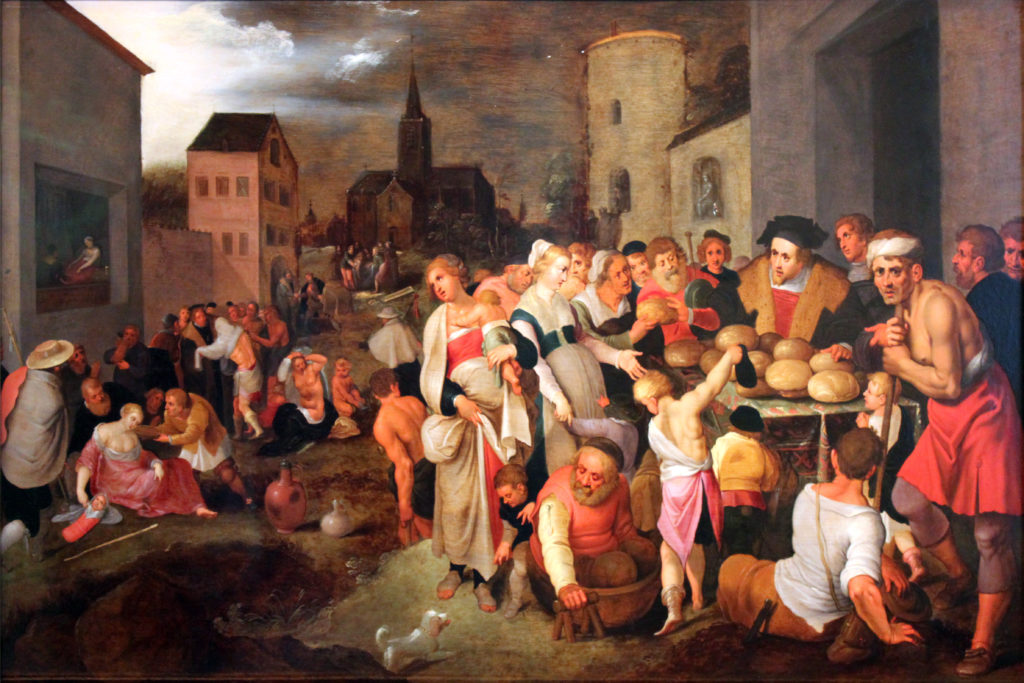
Frans Francken the Younger – The Seven Works of Mercy(1605)Deutsches Historisches Museum Berlin(Public Domain, Wikimedia Commons)

Pierre Montallier – The works of mercy(c.1680)Eremitage, St. Petersburg(Public Domain, Wikimedia Commons)

Pieter Aertsen – Deeds of Christian Charity.(1575)National Museum in Warsaw(Public Domain, Wikimedia Commons)

Meester van de Levensbron, De Zeven Werken van Barmhartigheid, 0039(Creative Commons Attribution-Share Alike 2.0 Generic, Wikimedia Commons)

Pieter Brueghel – Obras de Misericórdia(1601~25)National Museum of Ancient Art, Lisbon Portugal(Public Domain, Wikimedia Commons)
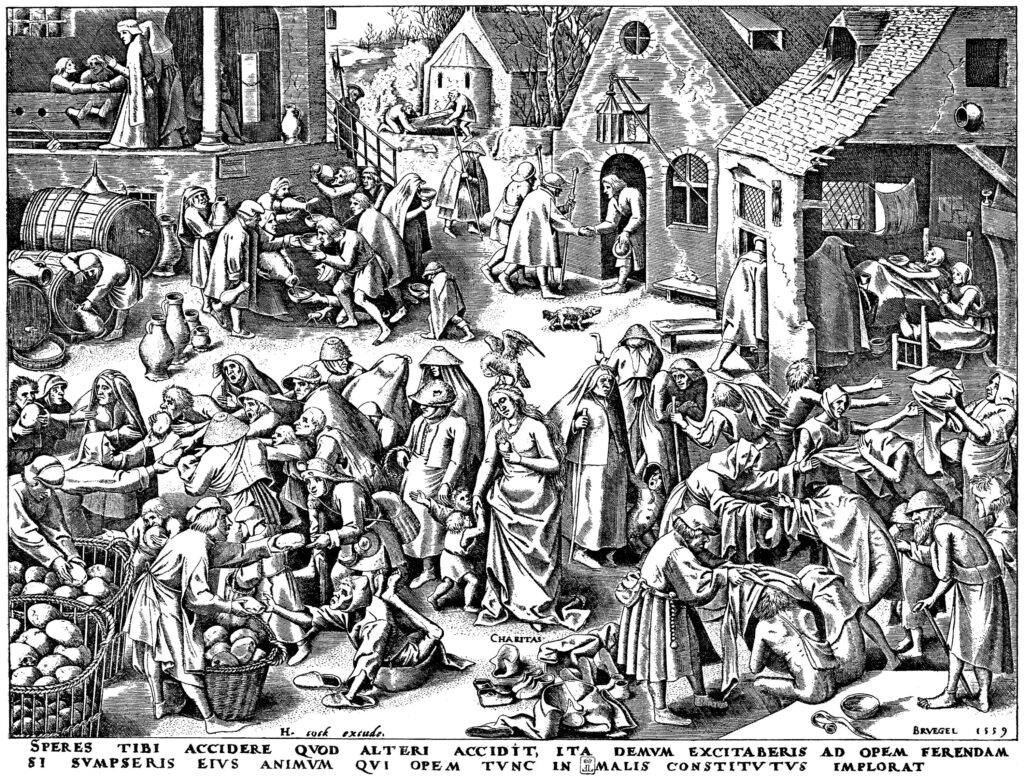
Pieter Brueghel the Elder, Phillip Galle – The Seven Virtues, namely the theological virtues faith, hope and charity and the four cardinal virtues prudence, justice, temperance and fortitude(1561~2)Kupferstich, 23,3 × 28,7 cm, Die druckgrafische Ausführung wurde Philippe Galle zugeschrieben. Bibliothèque Royale, Cabinet Estampes, Brüssel.(Public Domain, Wikimedia Commons)


41王又要向那左邊的說:『你們這被咒詛的人,離開我!進入那為魔鬼和他的使者所預備的永火裡去!
42因為我餓了,你們不給我吃,渴了,你們不給我喝;
43我作客旅,你們不留我住;我赤身露體,你們不給我穿;我病了,我在監裡,你們不來看顧我。』
44他們也要回答說:『主啊,我們甚麼時候見你餓了,或渴了,或作客旅,或赤身露體,或病了,或在監裡,不伺候你呢?』
45王要回答說:『我實在告訴你們,這些事你們既不做在我這弟兄中一個最小的身上,就是不做在我身上了。』
46這些人要往永刑裡去;那些義人要往永生裡去。」
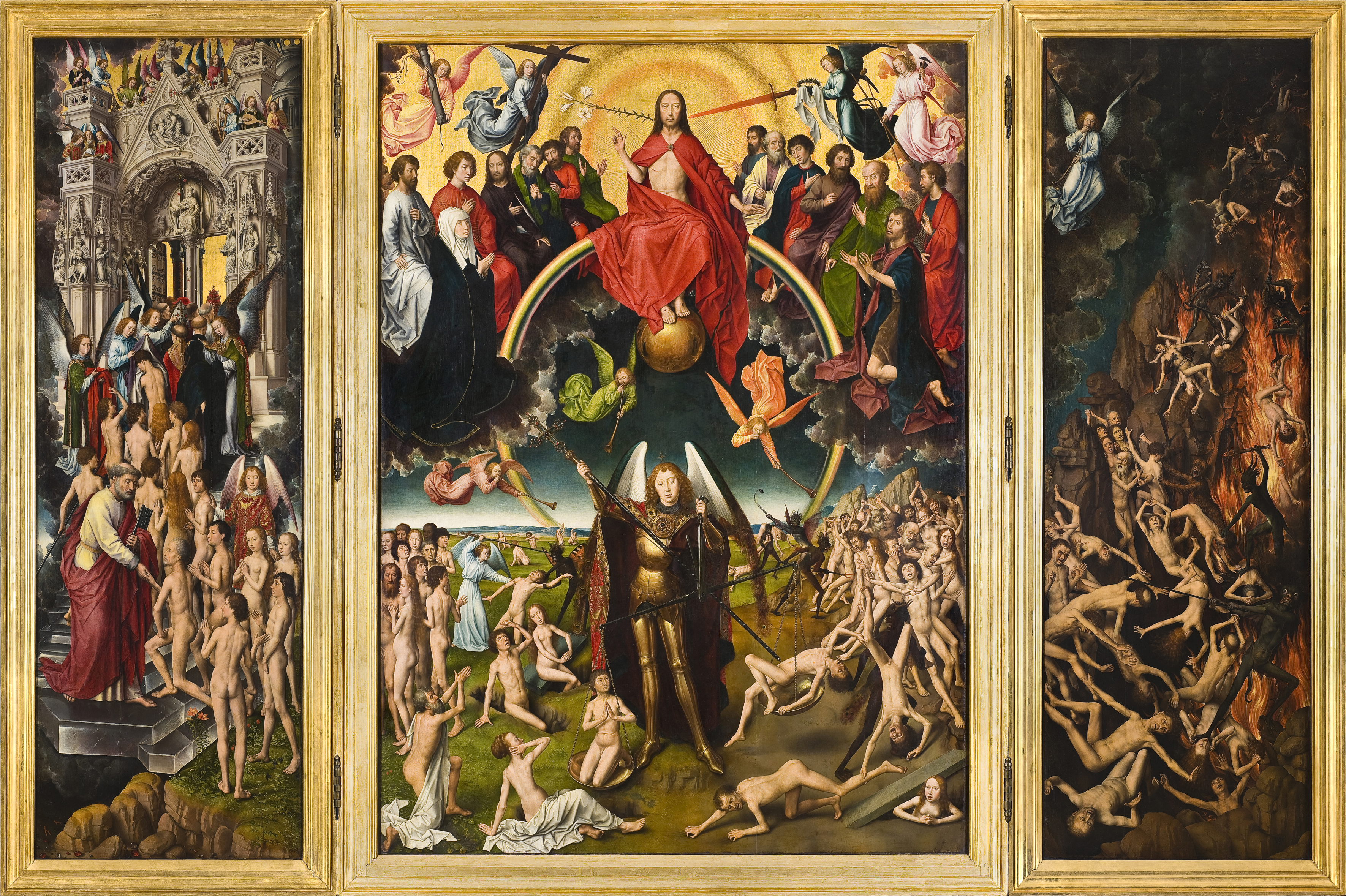
Hans Memling – The Last Judgment(c.1466~73)National Museum, Gdańsk(Public Domain, Wikimedia Commons)